An easy, accurate earthquake lesson for kids: what causes shaking, how faults and seismic waves work, and how students can learn earthquake safety. Chitran International Online Art Classes, LLC created this learning guide to help families connect clear science ideas with visual thinking and confident questions.
Start with the big idea
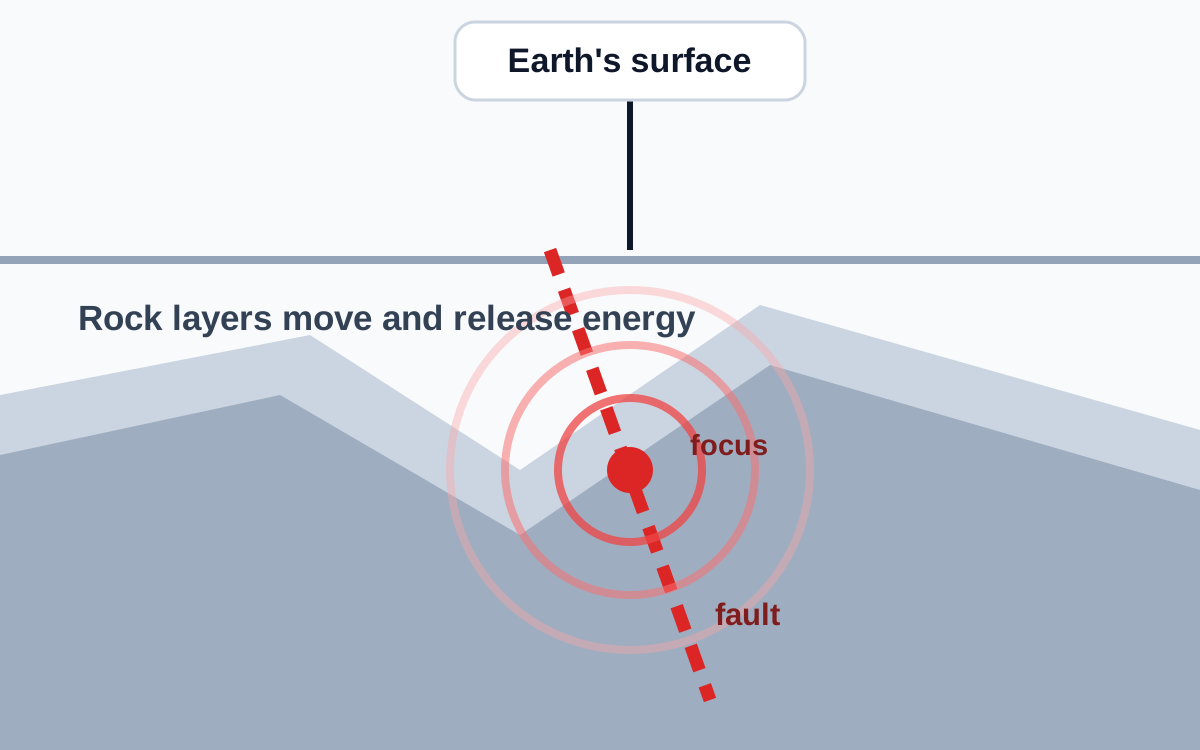
An earthquake is a sudden shaking of the ground. It happens when rocks deep in Earth move quickly and release energy. The shaking can feel small, like a passing truck, or much stronger. The important science idea is that an earthquake is not “the ground deciding to shake.” It is energy moving through solid rock.
Earth is always changing
Earth’s outer rocky layer is broken into huge moving pieces called tectonic plates. They move extremely slowly—often only a few centimetres in a year—but their edges can press, pull, or slide past one another. Rocks can bend slightly under this pressure. When they finally slip, the stored energy is released.
Faults are breaks where rocks can move
A fault is a fracture or zone of fractures in rock. Faults are places where blocks of rock may move relative to each other. The point inside Earth where movement begins is called the focus. The point on the surface directly above it is the epicenter. These words help scientists describe where an earthquake started.
Why the shaking travels
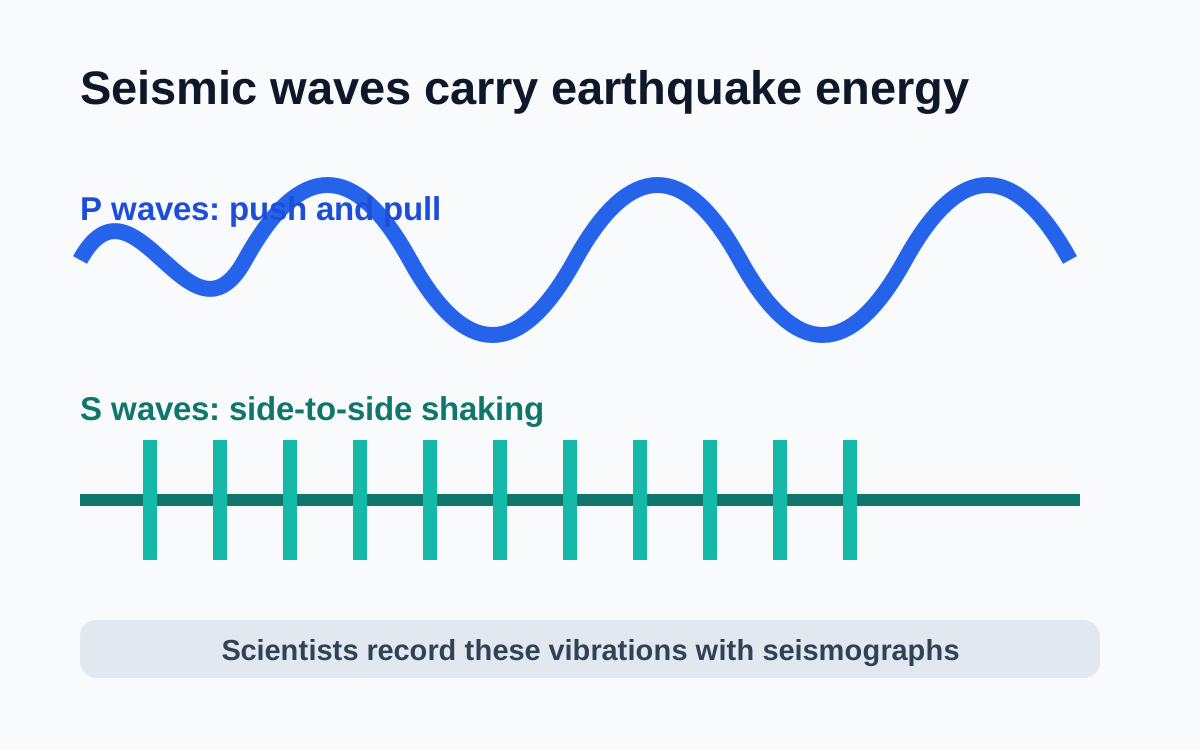
The released energy travels as seismic waves. Some waves push and pull rocks in the direction they travel; others move the ground from side to side. A seismograph is an instrument that records the motion. Scientists compare recordings from several stations to locate an earthquake and learn about its size.
Magnitude and intensity are not the same
Magnitude describes the size of an earthquake at its source. Intensity describes how strongly people and places experience shaking. A single earthquake has one measured magnitude, but intensity can differ from one neighborhood to another because distance, local ground conditions, and building design all matter.
What students should remember
Learning about earthquakes should build calm knowledge, not fear. Ask an adult, school, or local emergency authority about the plan where you live. During shaking, use the safety action taught by trusted emergency officials: drop, cover, and hold on. Stay away from windows and follow the directions of teachers, caregivers, and local officials.
Turn science into an art observation
Draw a simple cutaway of Earth: surface, rock layers, a fault line, focus, and spreading wave rings. Label the parts in your own words. Then create a second version that uses color and arrows to show energy moving. This kind of visual note helps students combine art skills with science vocabulary.